
Technology Title
ICRALA – Precision Corossion Removal for In-Service Maritime Maintenance
Tech Focus Area
Coatings/Corrosion Prevention
Abstract
Problem: Corrosion control and coating removal are among the most disruptive and costly challenges in fleet maintenance. Conventional methods—abrasive blasting and needle gunning—require heavy containment, generate significant hazardous waste, and often remove more sound material than necessary. These constraints push assets offline and entrench a “defer, fail, and repair” cycle, driving longer downtimes, higher compliance costs, strained labor, and degraded readiness. Maintainers have no practical means to perform precise, in-service spot repairs on tight or complex shipboard geometries before localized damage spreads.
Graphic
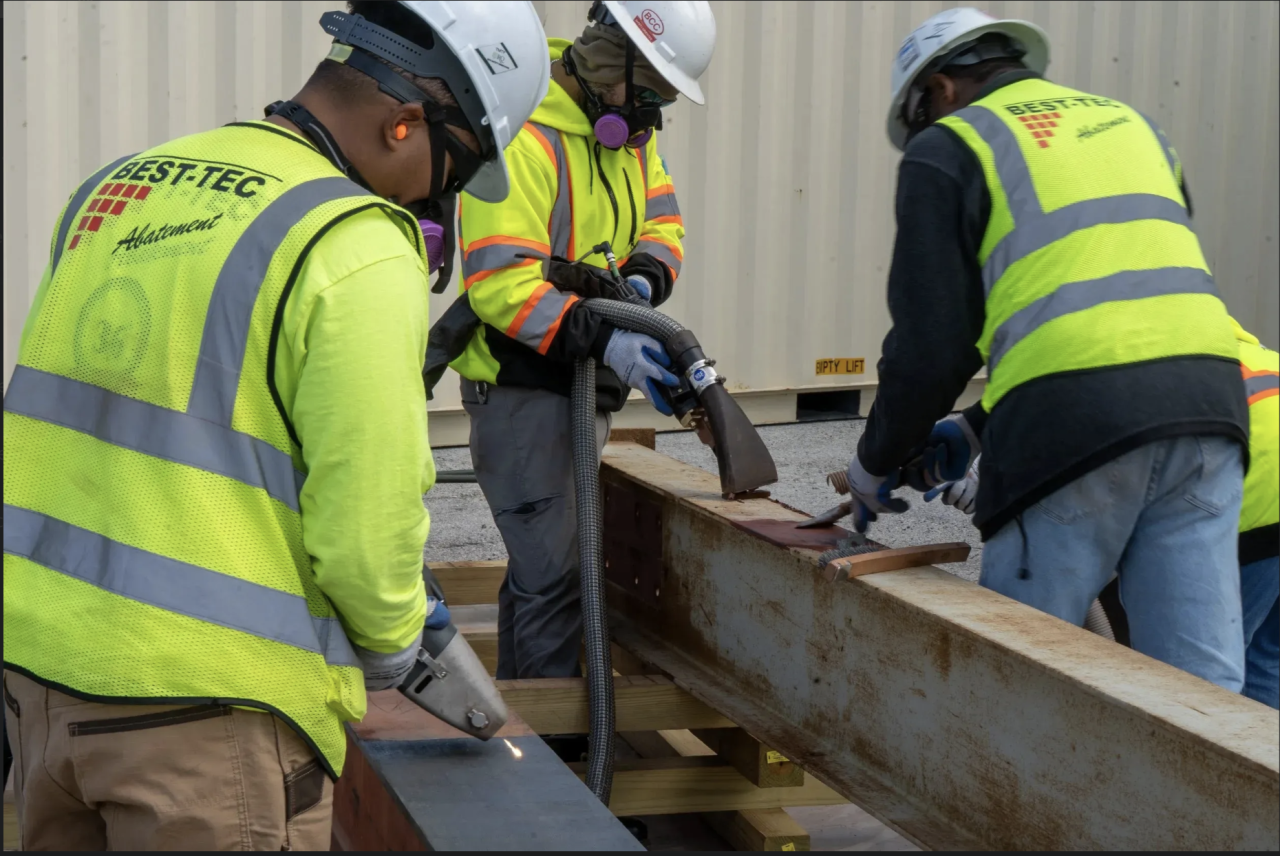
Description: ICRALA integrates induction-assisted coating removal with pulsed laser ablation into a single, media-free surface preparation process. Induction lifts coatings from the substrate; the laser then cleans the exposed surface to bare metal with high precision. Only the affected area is treated—including tight, complex, and sensitive geometries—leaving surrounding sound material intact. The process uses no grit, chemicals, or water, requires minimal containment, and produces significantly less hazardous waste than conventional blasting or needle gunning. The result: earlier, localized intervention on active assets—without the need for large-scale work packages or extended downtime.
Benefits: ICRALA directly improves maintenance efficiency, worker safety, and environmental compliance. Reducing containment requirements and hazardous waste lowers regulatory burden, cleanup time, and total sustainment cost. Assets stay in service rather than being fully shut down, protecting readiness and accelerating turnaround. The process is well suited to shipboard structures where conventional methods fall short—anchors, hawsepipes, deck edges, chocks, bollards, rail systems, and launcher interfaces. Applicability extends beyond maritime to Army and Air Force depots, structural components, and ground support equipment, making ICRALA relevant across Navy, Coast Guard, Army, Air Force, and DLA sustainment environments.
Challenges: Deploying a precision, in-service process across varied maintenance environments requires standardized operator qualification, repeatable procedures, and rigorously validated safety controls. Shipboard scheduling and access constraints demand operational flexibility at every stage. To meet these requirements, AMPP is developing a maritime training and certification program. AirQuest Environmental provides CIH-validated environmental and worker-exposure monitoring to verify engineering control performance against conventional methods in live operational settings.
Results: ICRALA was patented in 2025 and is operationally validated under NCMS CTMA Project #2026026-143239, currently at Technology Transition Level 1 and advancing toward TT2. Field demonstrations aboard active Navy ships at Naval Station Norfolk—spanning CG, LSD, DDG, and LPD classes including, but not limited to, USS Gettysburg, USS Gunston Hall, USS Tortuga, USS Stout, USS San Antonio, and USS Eisenhower (flight deck scupper)—documented 408 linear feet and 1,835 square feet of surface preparation. In a single workday, laser ablation cleared coating from 1,050 screw heads to enable panel removal. LCS hull operations are underway in San Diego, where Phase 3 deployment at Naval Base San Diego commenced in mid-June 2026; Naval Station Mayport is slated to follow. Collectively, these results confirm repeatable, operationally relevant performance across active fleet maintenance environments.



