
Technology Title
PRINGLES Test Set: Signal Injection into TH-73 Thrasher Fuel Quantity Indication System
Tech Focus Area
Enhanced Inspection
Abstract
Problem Statement: The mission of NAVAIR’s Naval Air Training Command (CNATRA) is to train, mentor, and deliver the highest quality Naval Aviators that win in competition, crisis, and conflict. The TH-73 Thrasher is the premier rotary and tilt-rotor pilot training platform used to support this mission. TH-73 Fuel Computing Units (FCU) are consistently one of the platform’s top degraders. The FCU compiles the fuel quantity levels from the five probes in the TH-73 indication system and sends this combined quantity to the pilots’ multifunction displays. Research has shown that the fuel quantity indication system has issues with reporting fluctuating figures in the hundreds of pounds, quantity showing a red X, and low fuel level cautions. Attempts at using commercial or Navy standard Fuel Control Test Sets do not interface with the TH-73 fuel quantity indication system. Troubleshooting procedures for the fuel quantity indication system are severely limited due to inability to access the system. The maintenance evolution of replacing an FCU also drives an operational check which takes significant maintenance manhours and a full tank of fuel. A report from the Original Equipment Manufacturer (OEM) placed the No Fault Found (NFF) rate at 65% for the most recent 52 returned units. This phenomenon created a high NMCS (Non-Mission Capable due to Supply) condition for the TH-73 training fleet reducing pilot training and creating a backlog at the vendor. This situation presented an urgent need for the US Navy to develop a solution to simulate inputs and outputs of the FCU to better troubleshoot the fuel quantity indication system. An effective solution would lower maintenance manhours, reduce fuel usage, reduce the No Fault Found rate, increase aircraft readiness, and thus increase Student Naval Aviator throughput.
Graphic
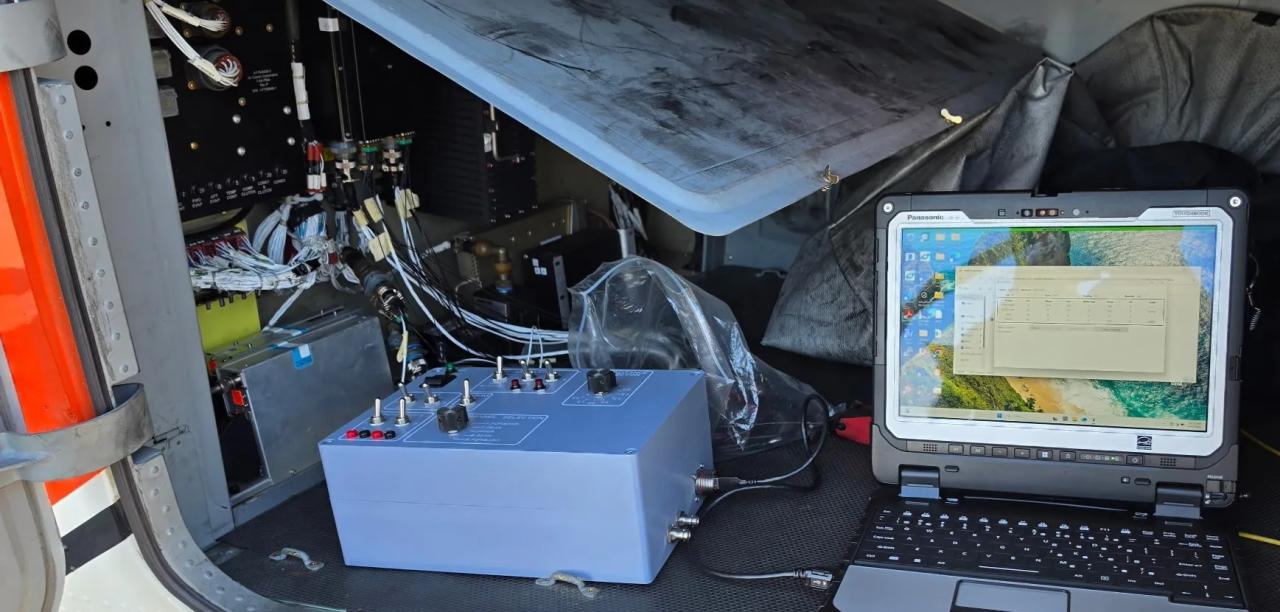
Description of the Innovation Solution: The Probe Response Integrated Gauge Level Evaluation System (PRINGLES) test set can test all functionality of the FCU. It has functionality to simulate the fuel low level circuit in the FCU, simulate the low fuel signal to the aircraft, triggers the internal FCU Built-in-Test (BIT), and can simulate fuel level on each probe channel. The main functionality to simulate probe level is achieved by incorporating the head of a fuel probe to convert the selected capacitance level to the same signal the FCU can read. The capacitor bank levels were experimentally derived during field testing. The fuel low level circuit has two parts: the A and B switches return the low-level signal the fuel probe outputs to the FCU, which then signal the associated red LED. The low level WARNING switch grounds the aircraft signal and alerts a FUEL LOW caution to the pilot’s function display. The TEST switches trigger the internal BIT test function; this test will also output a 0 pound fuel reading on the quantity circuit. The INDICATORS switches toggle the output signal from sending to the aircraft to sending to the multimeter test points. This functionality allows for bench testing of the FCUs.
Benefits to the DOW: There is an opportunity this unit can be fielded to the US Air Force MH-136A since it is a platform produced by the same OEM and may have a similar Crane Aerospace fuel quantity indication system. Results so far with the unit have exceeded expectations. The prior 12 months of TH-73 operation (June 2025 to May 2026) saw 52 removals and replacements (4.3 replaced per month). Since the PRINGLES has been fielded, 1.6 FCUs have been replaced per month, a potential reduction of $282,000 in annual repair cost if the replacement rate holds steady. The No Fault Found rate is yet to be determined since the backlog of previously returned units has not been cleared to date. The FCU operational check time has been reduced from approximately 13 hours (2 mechanics @ 6 hours, 1 mechanic @ 1 hour). There is no longer a requirement for a full tank of fuel to be drained (155 gallons at $7.00 for Jet A = $1,085). Instead, it takes one mechanic one hour with the PRINGLES test set and no fuel costs. The average troubleshooting time for fuel related discrepancies has reduced from 11.3 hours over the previous 12 months (June 2025 to May 2026) to 9.0 hours post PRINGLES delivery. In that same time range, the average Non-Mission Capable (NMC) aircraft hours has reduced from 286.5 hours to 155.3 hours post PRINGLES delivery. All of these results contribute to streamlining troubleshooting, repair, and return to operations of training helicopters to support CNATRA’s mission of training Naval Aviators.
Innovation Challenges: During development, standard capacitance based test sets were unable to interface directly with the FCU. Additional information on the system architecture was requested from the OEM and their sub-vendor Crane Aerospace. There is limited technical data that has been shared requiring US Navy to experimentally reverse engineer the communications between the probe and FCU and the probes internal circuitry.
Technical Maturity/ Demonstration Results: The first iteration of the PRINGLES is sufficient to simulate signals into the FCU using experimentally derived capacitance range. The background idea of using a test set to simulate signals into FCUs is not unique and has been demonstrated in other systems. Using the head of a fuel probe as the interface to the fuel indication system is not ideal but there is work in-progress to reverse engineer the probe’s internal circuitry to understand the full functionality and to replicate it. Duplication of the circuit and incorporation into the PRINGLES Test Set will transform this project into full maturity.



