
Technology Title
Virtual Instrumentation for Enhanced Test and Evaluation
Tech Focus Area
Reliability Improvement
Abstract
Problem Statement: The Navy’s circuit card test and repair capabilities are severely impacted by outdated and expensive testing hardware, creating operational risks. A 2021 NUWC Keyport study highlighted these issues, leading to a high-value investment by Naval Innovation Science and Engineering (NISE) in a virtual instrumentation testing system. This new system has markedly improved operational efficiency, minimized downtime, increased test accuracy, and expedited weapon deliveries, providing tremendous benefits to the warfighter and setting new standards in testing technology.
Graphic
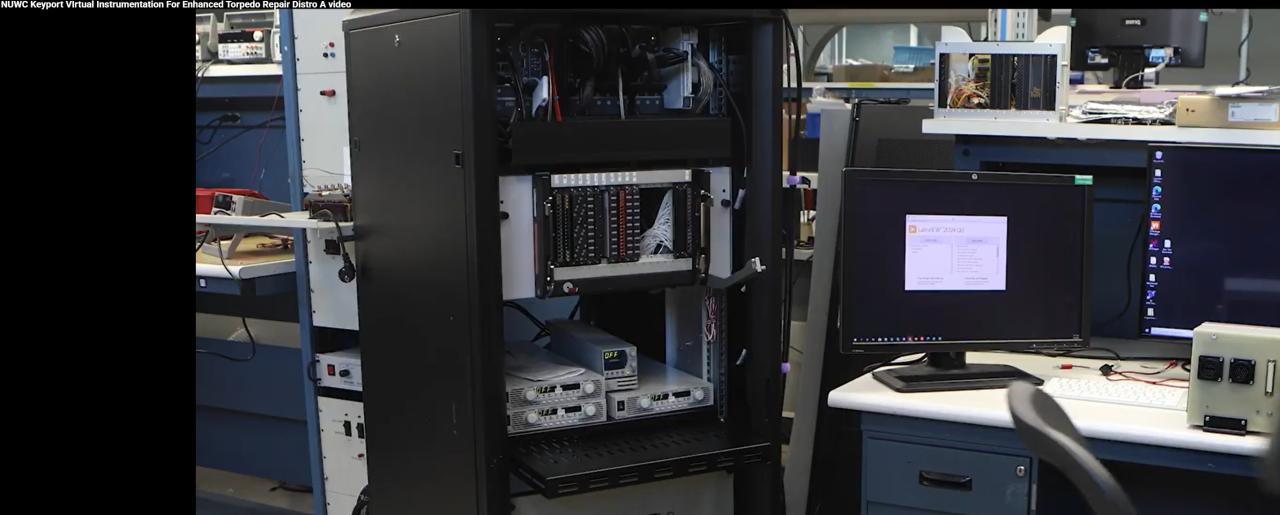
Description of the Innovation Solution: The Virtual Instrumentation project revolutionizes test and repair processes by leveraging software (primarily written in LabVIEW) to command, control, and configure physical instrumentation hardware. This system offers several key advantages:
- It uses a unified system to control all instruments, saving time and effort compared to separate, custom setups with complex programming.
- Its flexible interface adapts easily to different test needs, allowing for seamless interoperability and rapid development or replacement of components.
- This unique, adaptable approach enables dynamic reconfiguration of testing hardware, making it possible to conduct multiple tests using the same setup.
The rapid exploration and application of these solutions were greatly facilitated by leveraging the NUWC Keyport Innovation Center (KIC) test hardware and software contracts with National Instruments, as well as other government and academic partnerships. These partnerships significantly accelerated the development and implementation of the virtual instrumentation system, allowing us to deliver advanced capabilities at a much faster pace.
This innovation significantly enhances efficiency, reduces the need for multiple high-maintenance test stands, and transforms the Navy’s testing capabilities.
Benefits to the DoD: Implementing the virtual instrumentation system is projected to save the Navy a minimum of $1 million annually, while increasing NAVSUP circuit card supply inventory. Without this technology, the inventory of DoN is expected to be severely impacted. This solution eliminates the need for high-maintenance test equipment, significantly reducing turnaround times from several months to less than one month. It has expanded to support Navy platform repairs, exemplifying its technological capability and enhancing operational readiness.
Innovation Challenges: Key challenges in transitioning to virtual testing included:
- Culture Change: Overcoming resistance from traditional test set design and increasing awareness of virtual instrumentation.
- Proving Concept and Approval: Establishing the new technology’s credibility through initial wins and securing funding.
- Stakeholder Buy-In and Training: Gaining stakeholder support and training personnel to transition to the new system.
- Technical Integration: Ensuring system compatibility with existing infrastructure and addressing data fidelity and scalability.
Technical Maturity/Demonstration Results: The virtual instrumentation system has achieved rapid fault identification, enhanced diagnostics, reduced maintenance times, and significant cost savings. It has been validated through prototype development for torpedoes and submarine components, demonstrating its scalability and adaptability at a TRL 7.
As of FY26, the team is in its first year of programmatic funding, delivering advanced capabilities to the Fleet’s Regional Maintenance Centers, depots, and technical community at a TRL of 8 and 9. This has driven a cultural shift and secured buy-in for transforming undersea weapons and warfare program strategies.



