
Technology Title
Advanced Manufacturing for sUAS Sustainment & Component Production
Tech Focus Area
Business Process / Partnerships
Abstract
Problem Statement: Statutory National Defense Authorization Act (NDAA) prohibitions restrict the Department of War (DoW) from procuring foreign-manufactured uncrewed systems and components. This ban exposed severe domestic vulnerabilities, as commercial small Unmanned Aircraft Systems (sUAS) rely almost exclusively on adversary supply chains for propulsion, batteries, and avionics, resulting in 12-to-18-month lead times and component shortages that have compromised warfighter tactical reconnaissance readiness, grounded training fleets, and left tactical units without an organic, trusted supply pipeline in contested logistics environments.
Graphic
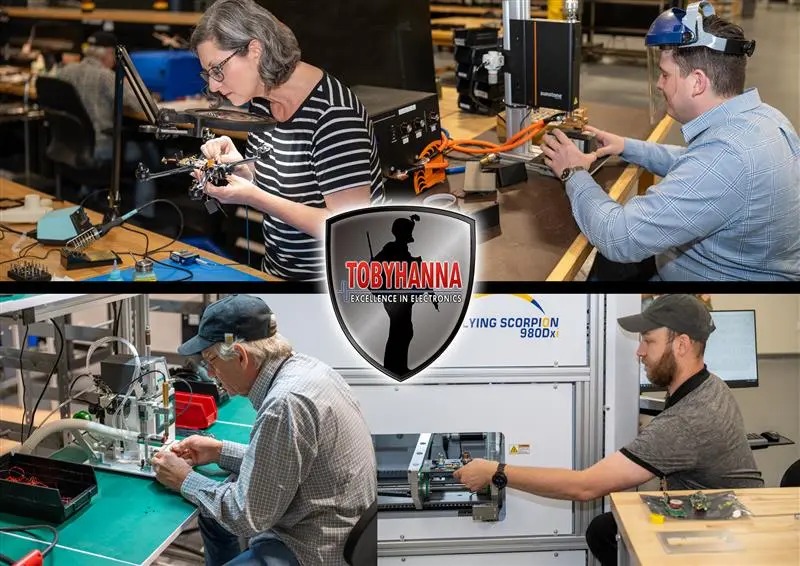
Description of the Innovation Solution: To address supply vulnerabilities, TYAD rapidly engineered and stood up an organic manufacturing and depot-repair ecosystem consisting of four synchronized production cells. First, the Brushless DC (BLDC) Motor Line establishes domestic stator winding, balancing, and magnetic rotor integration, delivering up to 500,000 NDAA-compliant motors annually utilizing domestic magnet alternatives. A TYAD-built motor successfully powered a Group 1 small UAS to a record-breaking flight over eight hours. Second, a Battery Assembly Line executes high-density lithium cell matching and precision spot-welding. Third, a Circuit Card Assembly Line leverages advanced surface-mount technology (SMT) to produce up to 150,000 electronics boards annually. Finally, components converge at a Drone Integration Cell for final airframe assembly, firmware configuration, and functional flight testing before deployment.
Benefits to the DOW: TYAD’s sUAS ecosystem delivers immediate strategic benefits to the DoW, chief among them absolute Supply Chain Sovereignty. This organic, NDAA-compliant pipeline will completely insulate tactical drone programs from foreign export bans, directly maximizing fleet readiness and warfighter agility. Furthermore, internal component production yields substantial cost avoidance and lifecycle extension across the Joint Force by bypassing sole-source markups and avoiding reactive obsolescence redesigns. Ultimately, this initiative provides the DoW with a scalable surge capacity within the Organic Industrial Base, aligning with the Secretaty of War’s intent to reinvigorate the industrial base, reducing contracting repair turnaround times from months to days and supporting cross-service platforms across the Army, Navy, Air Force, Marine Corps, and Defense Logistics Agency.
Innovation Challenges: Key hurdles included engineering NDAA-compliant domestic alternatives for foreign rare-earth permanent magnets, implementing flexible production infrastructure adaptable to rapid drone iterations without costly retooling, and navigating volatile commercial material markets. Additionally, TYAD had to overcome contracting lead times of 6–12 months that create friction against rapidly evolving adversarial pacing threats, while executing a disciplined capital roadmap within strict Working Capital Fund financial regulations.
Technical Maturity / Demonstration Results: To showcase this production ecosystem, TYAD offers two physical demonstration options. Option A focuses on the BLDC Motor cell, displaying an organic TYAD-wound BLDC motor mounted onto an airframe, alongside raw stators, copper windings, and balanced rotor magnets. Option D focuses on the Circuit Card Assembly SMT cell, displaying an unpopulated PCB alongside an SMT pick-and-place feeder reel, a freshly reflowed Electronic Speed Controller board, and a finished conformal-coated unit.



