
Technology Title
Anniston Army Depot Support to the US Army Operational Readiness Program
Tech Focus Area
Autonomous Logistics
Abstract
Problem Statement: Tactical units in the U.S. Army, specifically those with older M1A2 Abrams and M88A2 HERCULES vehicle fleets, face challenges in maintaining operational readiness for deployments and training rotations. There is a need to bridge the gap between depot-level capabilities and the operational needs of Brigade Combat Teams (BCTs) to enhance equipment readiness and the skills of field-level maintainers.
Graphic
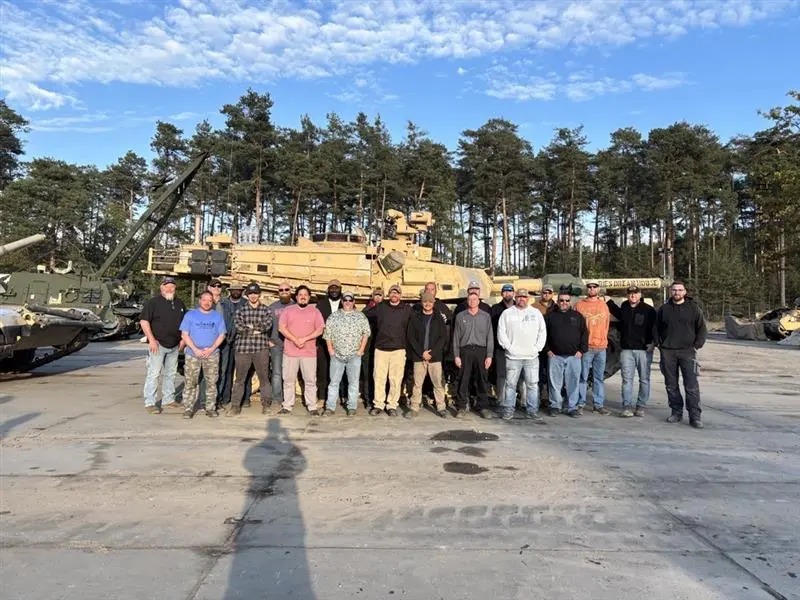
Description of the Innovation Solution: The Operational Readiness Program (ORP) is a strategic initiative that directly integrates depot-level maintenance and resources with tactical units. The program employs a multi-phase approach, including “Asset Seeding” where ANAD provides operational assets to units, and deploys “fly-away teams” of subject matter experts to collaborate with unit maintainers during training and deployments. This provides hands-on training, on-site repairs, and logistical support.
Benefits: The ORP directly increases the operational readiness of critical combat fleets. For example, in the pilot program with the 1/1 Infantry Division, the M1A2 Abrams fleet saw a readiness gain of 11%, and the M88A2 HERCULES fleet saw a 19% gain. It also enhances the skills and confidence of unit maintainers and fosters a stronger maintenance culture, ensuring units are better postured for operational missions.
Innovation Challenges: The program faces challenges such as significant drops in operational readiness during intense training exercises (e.g., a 29% drop for Abrams and 37% for HERCULES during one phase). Other challenges include parts shortages and the discovery of new, unforeseen issues during inspections and repairs in the field.
Technical Maturity/Demonstration Results: The ORP has been successfully piloted with the 1/1 Infantry Division through a full six-phase cycle, from initial inspections at Fort Riley to deployment support in Europe (Poland and Bulgaria). The program has demonstrated its effectiveness by increasing fleet readiness, conducting numerous on-site repairs (e.g., 25 vehicles returned to fully mission-capable status during EUCOM deployment), and facilitating the installation of over $38,000 in on-hand parts in its initial phase.



