
Technology Title
GUARDIAN SmartPOD: Automated Preservation for Mission-Critical Systems
Tech Focus Area
Coatings/Corrosion Prevention
Abstract
PROBLEM STATEMENT: Corrosion and material degradation drive aircraft downtime and cost the DoW an estimated $20.6 billion annually. Current preservation practices are manual. Internal corrosion protection of gearboxes, transmissions, APUs, fuel cells, and other stored assets requires recurring multi-step spraying procedures and numerous pieces of support equipment. Processes are labor intensive, depend on correct execution, and are vulnerable to errors and missed intervals. Every incomplete cycle transfers risk to asset availability, while the labor burden competes with higher-priority maintenance.
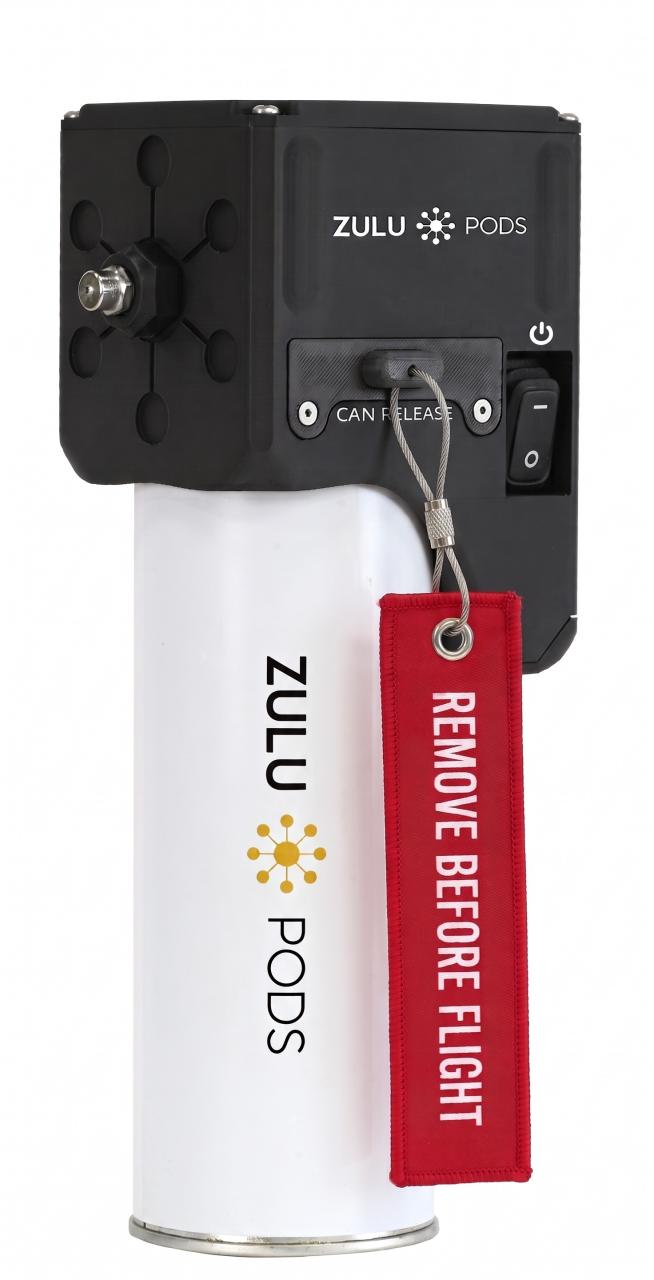
DESCRIPTION OF THE INNOVATION SOLUTION: The GUARDIAN SmartPOD is a compact, modular, intelligent fluid delivery system protecting mission-critical systems from corrosion degradation. It installs through existing access ports with no retrofit, then fogs corrosion preventive compounds into the protected volume. The system is form-factor and fluid agnostic, using customizable pressure vessels, hose, and nozzle configurations to optimize protection. Optional edge-level sensing adds automated, long-duration protection: onboard sensors collect data which software converts into maintenance directives, turning a fixed-interval task into a condition-based one. These capabilities are unique in the marketplace and protected by U.S. patents.
BENEFITS TO THE DoW: SmartPOD replaces a recurring manual procedure with an automated one, eliminating the missed-interval failure mode rather than managing it. Benefits include reduced preservation labor and support equipment, fewer corrosion-induced maintenance actions, improved asset availability, and reduced maintainer chemical exposure. Because no retrofit is required, it can be fielded on in-service platforms without a modification program. The sensor output also produces fleet exposure data where none exists today, supporting condition-based sustainment.
Graphic
INNOVATION CHALLENGES: Principal challenges are qualifying fluid distribution across complex internal geometries, achieving long-duration delivery within tight volume and mass constraints, sensor durability in salt-fog, and modifying maintenance instructions per applicable platform. Translating sensor data into directives maintainers will act on requires validation against observed corrosion outcomes, not modeling alone.
TECHNICAL MATURITY/DEMONSTRATION RESULTS: SmartPOD is at TRL 5, matured through a combination of system analysis and experimental validation. The analytical approach leverages computational fluid dynamics (CFD) to model atomization, transport, and deposition within enclosed volumes. Testing spans sub-component, sub-system, and system level, progressively validating fluid delivery and product performance. Designed for aerospace, ground, and maritime vehicles, the SmartPOD is positioned for tri-service adoption. ZPI is actively collaborating with multiple government agencies to conduct operational demonstrations and drive further product maturation.



