As the Army actively transitions to digital engineering, NCMS is providing a secure, multi-cloud digital ecosystem where Army engineers are advancing their skills in model-based systems engineering (MBSE). This initiative supports DoW Instruction 5000.97, “Digital Engineering” and Army Directive 2024-03, “Army Digital Engineering,” both of which provide procedures for accelerating digital engineering methodologies, technologies, and practices. Expanding usage of digital engineering is a high priority across the DoW because it reduces costs, shortens acquisition timelines, and improves system sustainment through high-fidelity virtual representations.
The Army currently has three main focus areas for applying digital engineering: ground vehicles, aviation, and sensors. An essential part of this process is transitioning Army engineers and product teams to MBSE. Recently, a CTMA project team trained a cohort of Army engineers on an MBSE tool via the NCMS Digital Enterprise, which provides a secure, multi-cloud digital ecosystem to safely demonstrate capabilities with multiple partners from government agencies, industry, and academia. This digital ecosystem employs AWS GovCloud environments that are NIST 800-171 compliant up to the DoW IL5 level.
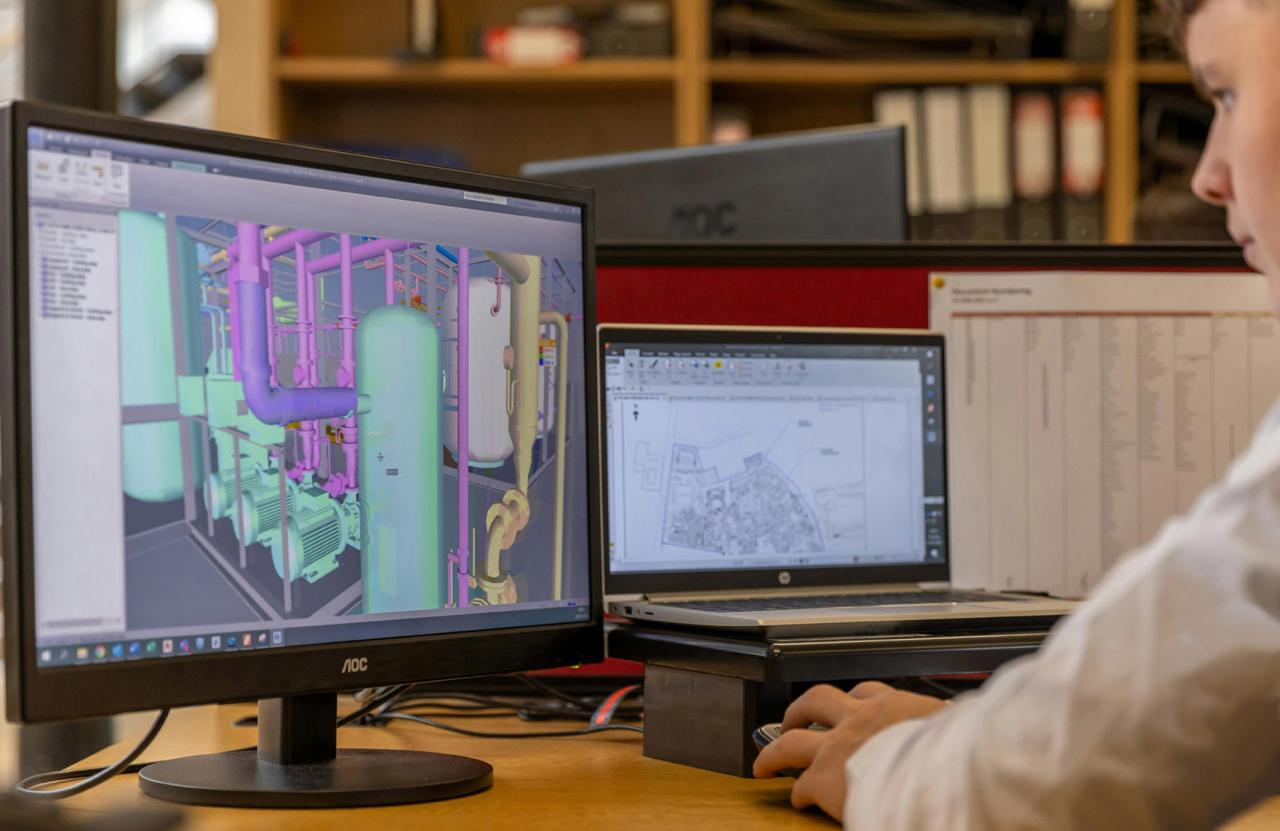
In this CTMA project, Army engineers completed training within the NCMS Digital Enterprise using a Siemens integrated systems engineering environment called System Modeling Workbench®. This tool allows teams to create and manage multi-domain product architectures and digital threads, allowing them to apply MBSE concepts to the entire product development process.
“This project provided a scalable training environment for upscaling the workforce in a very rapid manner using digital engineering tools,” Richard Fink, Service Program Manager, Siemens Government Technologies, said. “We set up an environment for engineers where everything was ready to go, from training materials to instructors to support mechanisms.”
The project team established multiple pathways for workforce development. “A combination of classes and office hours provided the engineers with support while they started to use the new technology,” Fink said.
“The biggest success of this project is that we were able to interface with Army users from different levels,” Phillip Palanca, Software Implementation Consultant for Siemens Government Technologies, said. “There was a seamless transition in enabling the use of Siemens solutions in the NCMS Digital Enterprise multi-cloud environment. This fast transition time allowed engineers to gain hands-on experience.”
The CTMA project team learned lessons that can be leveraged for multiple types of workforce development initiatives across numerous technical areas—not only in the Army and DoW, but also in a wide range of public- and private-sector organizations.
“We learned what is necessary to establish a process by which a group of users from various organizations, but with a common functional responsibility, can get trained up on a new capability very quickly,” Fink said.
“It’s very beneficial to have a ready-to-go environment with the technology there, where users just need access,” Fink said. “Instructor-led training with SMEs available to support provides the right kind of environment. This approach can be scaled by adding new software, scheduling new training, or identifying users in different functional areas.”
Moving forward, the team will continue to grow the Digital Engineering Training Lab by expanding it across multiple technical areas.
“If functional managers and program managers have needs in a particular technical area, this resource is available for workforce development and upskilling,” Palanca said.