
Technology Title
Solving the $5.5B intermittent / No Fault Found Problem in Weapon System Wiring
Tech Focus Area
CBM+
Abstract
Today’s defense environment requires responsive and affordable solutions to global weapon system support challenges. United States forces are simultaneously engaged in multiple humanitarian assistance and disaster recovery operations, major combat operations in Iran, fighting terrorism around the globe, and maintaining a deterrent to strategic-level threats like cyber warfare and weapons of mass destruction. However, as operations and near-peer threats from China and Russia increase, the Department of War’s (DoW’s) ability to economically sustain weapon systems has become increasingly challenging. The high, sustained operations tempo over the past two decades in harsh environments has eroded weapon system readiness and reduced expected life span.
Graphic
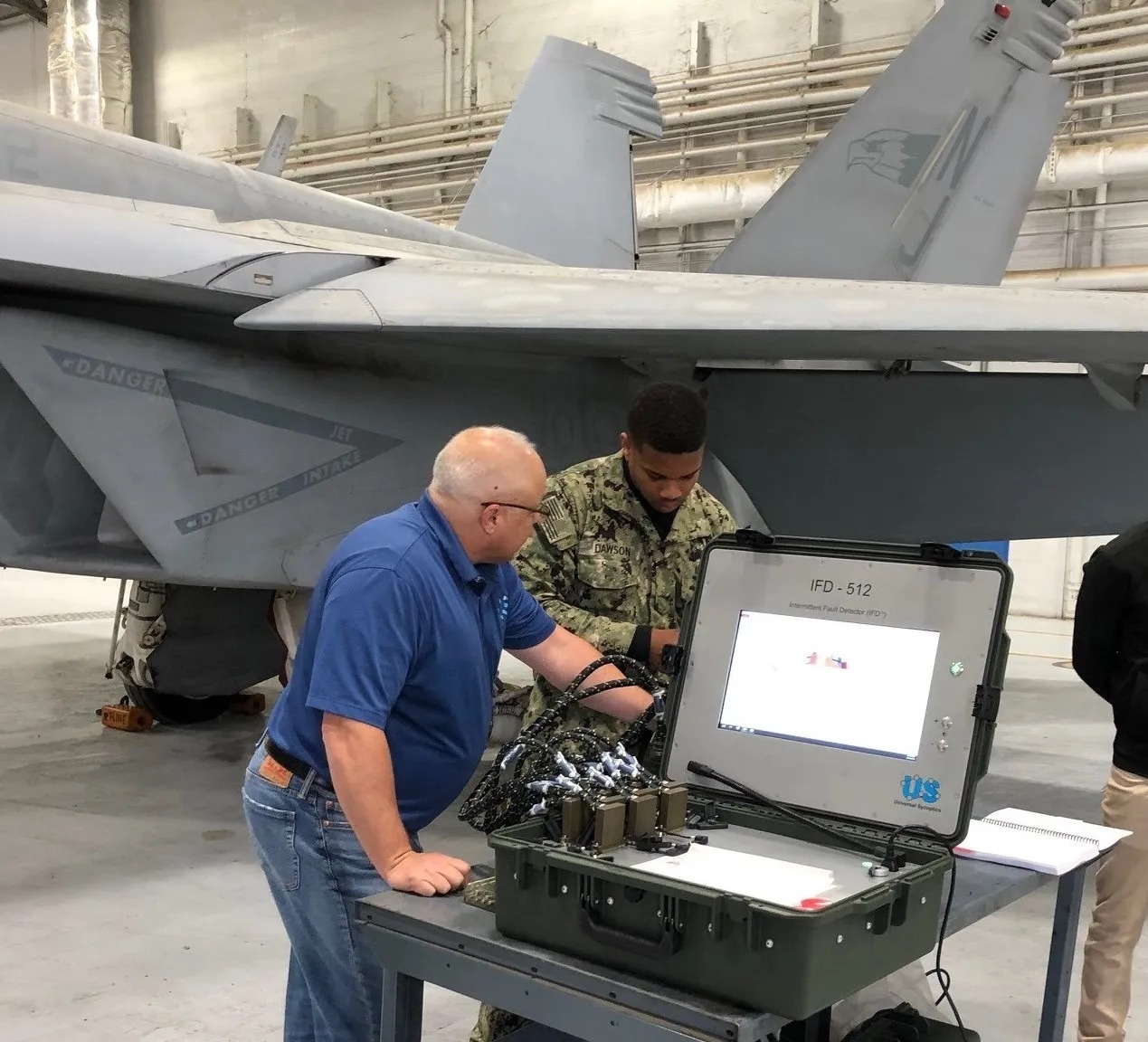
No Fault Found (NFF) test results in Line Replaceable Units (LRUs) / Weapon Replaceable Assemblies (WRAs), and weapon system Electrical Wiring Interconnect Systems (EWIS) primarily driven by intermittent faults, have become a significant concern and huge maintenance and life-cycle cost driver, and an operational readiness degrader within the DoW. For many DoW weapon system components driven to the depot for repair, less than half have the actual root cause of the problem identified and repaired. The other half tests NFF. Conventional Automatic Test Equipment (ATE) and automated wiring test sets were not designed to detect intermittent faults and cannot detect or isolate momentary intermittent failures that cause NFF. Undetected and unrepaired intermittent faults cause many DoW weapon systems to malfunction during operation because they are not detected and therefore not repaired at O-level, I-level, the depot, or contractor repair facilities. Instead, the NFF systems continuously cycle between the field and depot, resulting in over 383,000 days (1000 years) of end-item system non-availability and approximately $5.5 billion in non-value-added sustainment costs annually as of FY22. Based on inflation and the inability to solve this problem at scale, estimates from the Senate Armed Services Committee (SASC) and House Armed Services Committee (HASC) range from $8 billion to $10 billion in “No Fault Found” non-value-added expenditures annually.
The Intermittent Fault Detection & Isolation System 2.0™ (IFDIS 2.0™) and portable Intermittent Fault Detector™ (IFD™) are purpose-built to detect and isolate intermittent faults in LRUs / WRAs and EWIS and are working very effectively across the Services and commercial aviation. According to the January 2020 GAO Report (GAO-20-116), “Navy Fleet Readiness Center Southwest, California, implemented an Intermittent Fault Detection System on its F/A-18 aircraft generators. According to officials, the depot reduced repair time from 90 days to 30 days and quadrupled the generators’ time between failures”. The GAO Report continues, “using the Intermittent Fault Detection and Isolation System, the mean time between failures for the generators has increased, according to officials, from 104 flight hours to over 400 flight hours and recovered out-of-service assets generating about $62 million in cost savings”. In conclusion, the GAO Report states, “Finally, the Office of the Assistant Secretary of Defense is providing specific guidance in implementing best practices and lessons learned, such as the memorandum issued in April 2019 on the Intermittent Fault Detection and Isolation System directing the military services to adopt this best practice.” In reality, nothing significant has happened since 2019. If we want to solve problems, we must be blunt and stop snatching defeat from the jaws of victory. The intermittent / No Fault Found problem is easily solvable when the objectively proven solution is applied.



