
Technology Title
BALANCE-AI: Predictive Rotor Blade Dynamic Balance & Intake Rework
Tech Focus Area
Autonomous Logistics
Abstract
Problem Statement: At Corpus Christi Army Depot (CCAD), UH-60 Black Hawk rotor blade overhaul is a costly, resource-intensive process. Incoming blades undergo X-ray inspections to map structural defects alongside initial physical measurements. Historically, technicians lacked the capability to predict if a damaged blade could meet final dynamic whirl tower balance tolerances after repair. Artisans frequently invest hundreds of hours into composite patching, bonding, and trim rework, only for blades to fail dynamic spin testing. This results in wasted labor, scrapped materials, redundant spin stand runs, and prolonged aircraft turnaround times.
Graphic
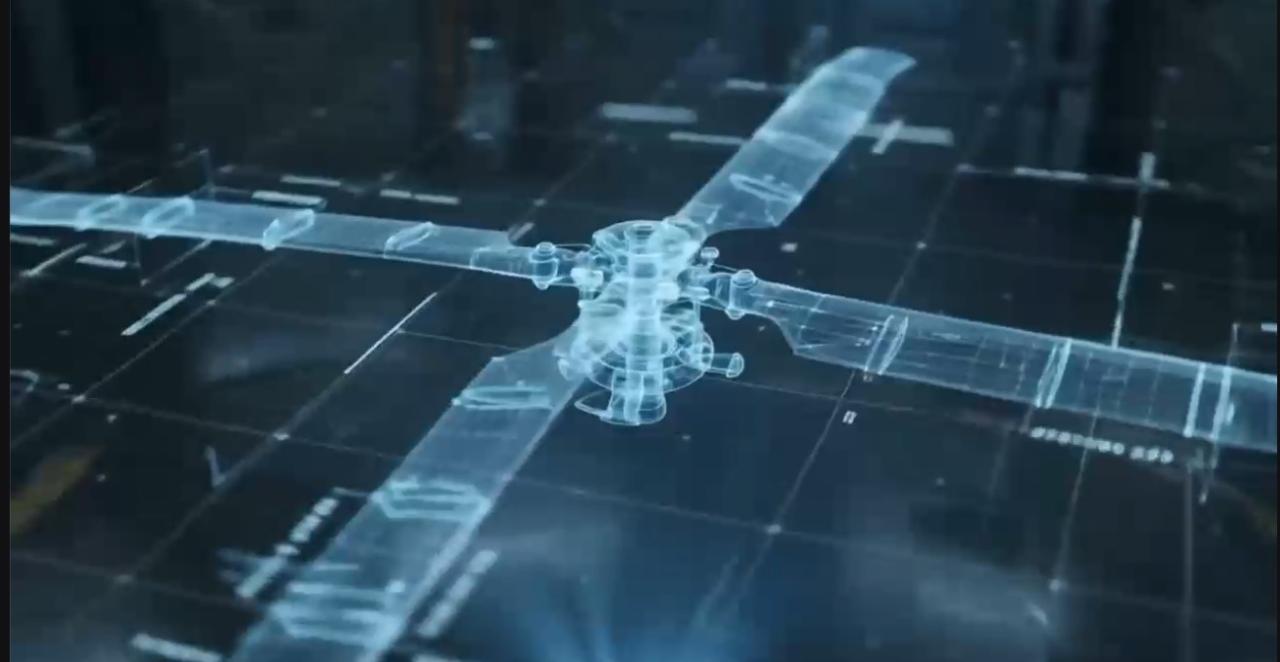
Description of the Innovation Solution: BALANCE-AI (Blade Analysis and Lifecycle Assessment with Neural Computing Engine and AI) is an AI-powered predictive triage capability deployed on Palantir Foundry / Army Vantage. The platform fuses historical depot test records, 3D X-ray defect coordinates, and pre-balance physical measurements (static balance weight, span/chord moments, center of gravity) with historical whirl tower pass/fail outcomes. Using an eXtreme Gradient Boosting (XGBoost) machine learning model, BALANCE-AI predicts upon initial intake whether a damaged blade can pass dynamic testing following standard rework. Delivered via an intuitive shop-floor application, the tool provides 3D defect visualization, and automated DMWR specification validation.
Benefits to the DoD:
- Upfront Triage & Waste Elimination: Accurately screens blades at intake, preventing hundreds of wasted artisan repair hours and unviable whirl tower runs on blades with unrecoverable defect profiles.
- Accelerated Fleet Readiness: Prioritizes reworkable blades and eliminates spin tower bottlenecks, accelerating the return of mission-capable UH-60 blades to combat aviation units.
- Depot Cost & Labor Savings: Replaces empirical trial-and-error with data-driven predictive triage, optimizing depot capacity and lowering per-blade overhaul costs.
Innovation Challenges:
- Multimodal Defect & Physics Correlation: Fusing 3D spatial defect coordinates with mechanical balance metrics to isolate critical non-linear failure thresholds (such as static weight).
- Sub-Second Shop-Floor Inference: Engineering an offline-trained pipeline and decoupled two-function architecture to deliver predictions in under 200 ms directly to shop-floor artisans.
- Prescriptive Actionability: Translating complex ML risk scores into predictable pass/fail analysis.
Technical Maturity / Demonstration Results: Currently piloted for CCAD on Army Vantage, BALANCE-AI is at Technology Readiness Level (TRL) 7/8. Operating through a fully hardware-agnostic mathematical architecture, the system achieves 78.9% prediction accuracy for upfront pre-rework intake triage.
This proven pilot serves as a highly scalable blueprint capable of expanding predictive balancing to drive shafts, gearboxes, and rotor heads across the enterprise.



