
Focus Area: Workforce Development/Visualization
Contact
Brian Scott
bscott@paradigmmaxq.com
619-916-7240
Paradigm Max Q brings together top-tier Subject Matter Experts with decades of frontline experience and empowers them with a full team of data analysts and engineers leveraging cutting-edge tools. The result is a pragmatic, experience-driven approach, rigorously validated through advanced analytics. We don’t just solve today’s problems; we deliver solutions that are sustainable, scalable, and built to prevent future challenges.
Optimized Sustainment System
Problem Statement:
Aviation sustainment efforts must evolve to meet the demands of modern operations, requiring updated capabilities, improved efficiency, and innovative approaches to maintenance, logistics, and lifecycle support. USCG ALC specifically requires assistance with Medium Range Recovery (H-60), Short Range Recovery (H-65), and Support Equipment Product Line to address:
- Lifecycle management tools
- Make/Buy/Repair Decisions
- Predictive Supply Chain
- DMSM/Obsolescence Management
- Logistics forecasting
- Software with improved forecasting capability
Technology Solution Statement:
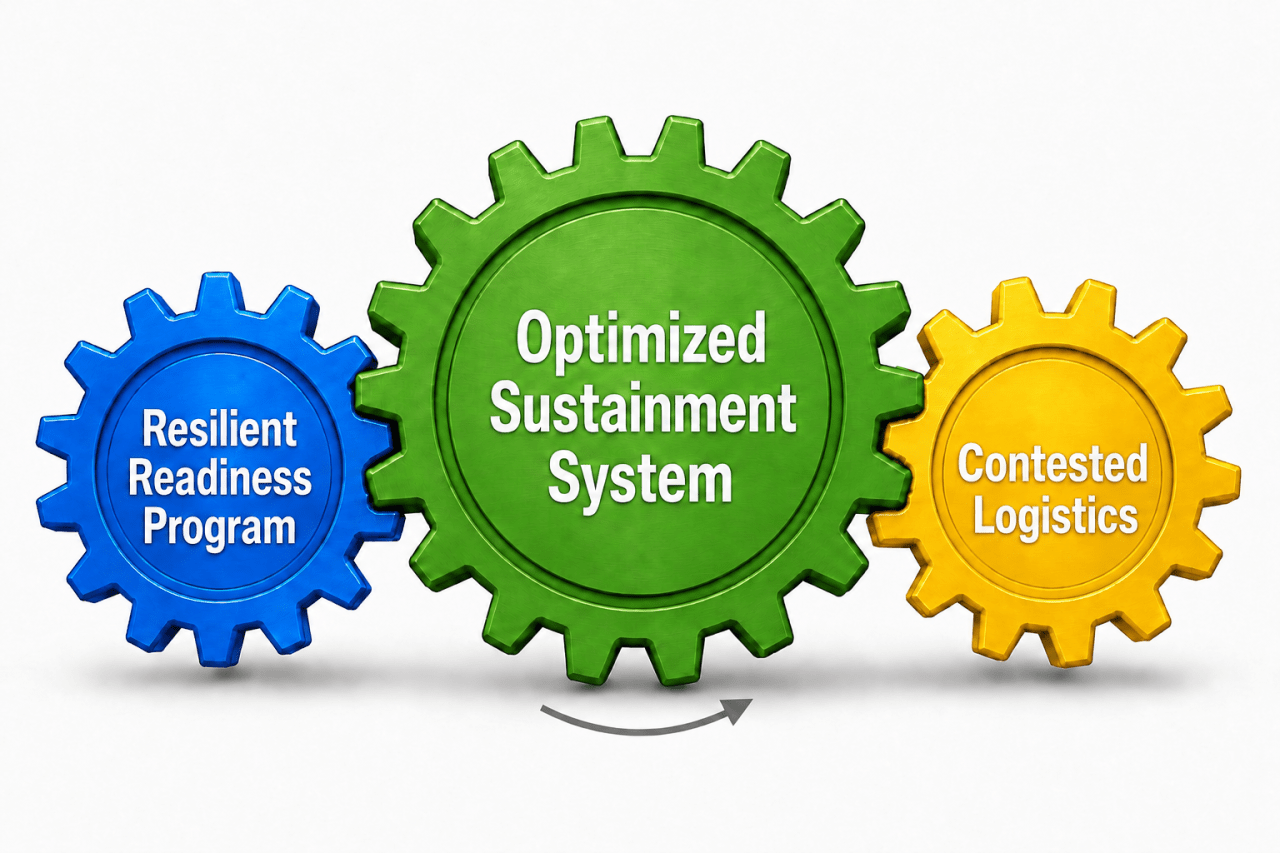
PMQ’s Optimized Sustainment System (OSS) advances traditional approaches and solves ALC’s sustainment challenges by integrating:
- Lifecycle management tools
- Establishes measurable sustainment baselines
- Predictive analytics
- Triggers targeted and defined sustainment solutions
- Enables data-driven make/buy/repair and forecasting decisions
- Provides optimization across supply chain, maintenance, engineering, and workforce domains
Benefits Statement:
OSS improves readiness performance through faster decision cycles, stronger forecasting accuracy, and cross-functional execution. By synchronizing maintenance, supply, engineering, and workforce actions, OSS has reduced downtime, shortened root-cause resolution timelines, improved asset availability, and lowered avoidable sustainment costs. Additional benefits include improved workforce utilization, clearer performance accountability, and increased resilience in degraded logistics environments. This approach supports measurable improvements using existing systems and available data.