A CTMA collaboration has made a significant advancement in maintenance workforce development: the creation of new training devices for the Bradley Fighting Vehicle (BFV)—exact replicas of the vehicle components—so that soldiers can become certified to maintain BFVs.
The initiative is a collaborative project between several Army organizations: PM Bradley, Bradley Training Division, PEO GCS Logistics, Army Test & Evaluation Command, and industry partners Performance Management Partners (PMP), Oasis Advanced Engineering, and Kratos Defense.
“These training devices are a huge difference maker for both the Army and industry,” George Patten, Managing Partner of PM Partners, said. “The devices support our soldiers in learning all the tasks, conditions, and standards to become certified mechanics… In this project, we took innovation from industry and put it into the military.”
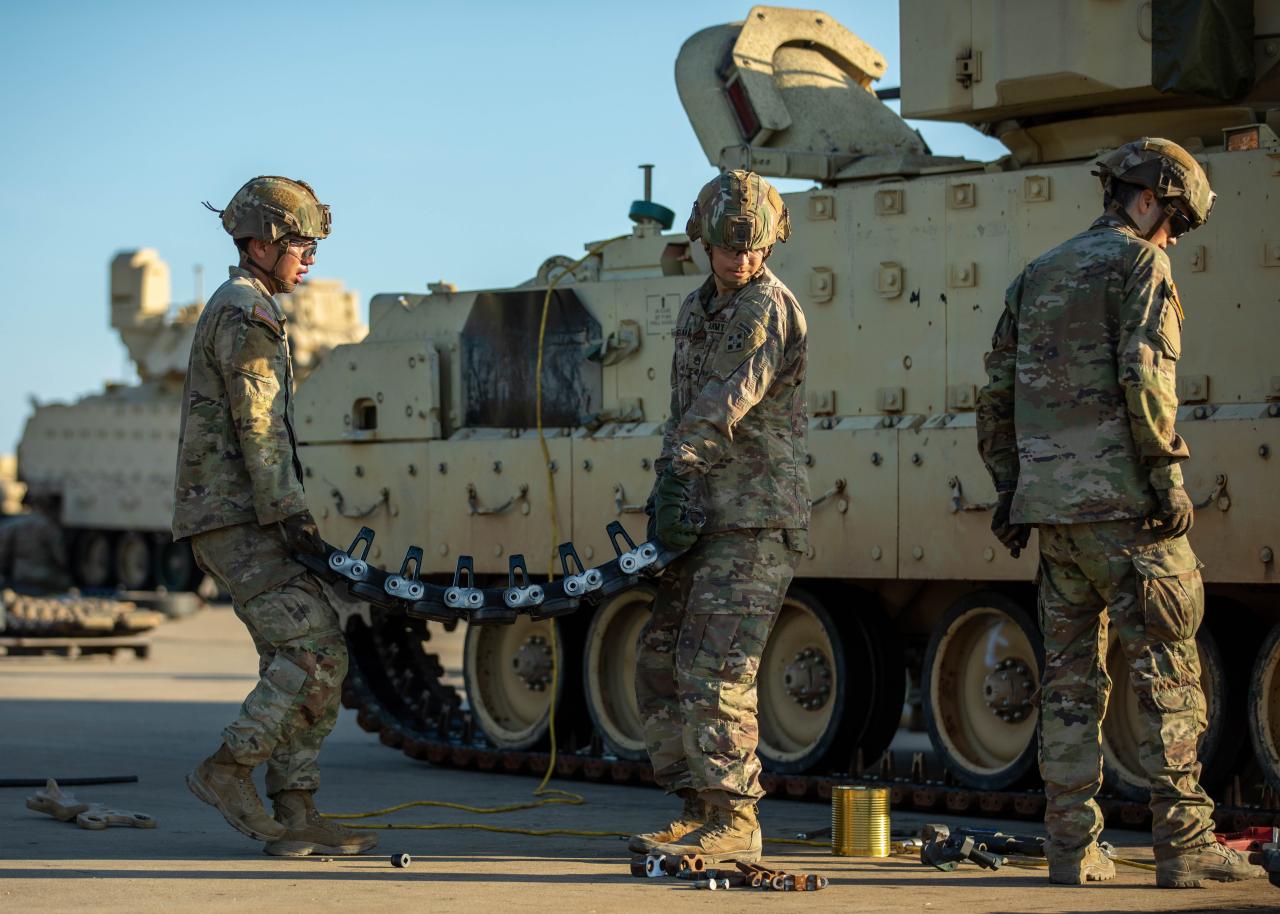
The team created two maintenance training devices for the Bradley A4: the Part Task Trainer (PTT) and the Hands-On Turret Trainer (HOTT). The PTT provides high-fidelity, full-scale representations of systems, allowing students to access hardware for fault isolation and repair training. The HOTT is an exact replica of the Bradley’s turret, armament, and fire control systems for student sustainment training.
Before these devices, soldiers were trained on live vehicles, which required breaking components to teach soldiers how to perform repairs. This method was expensive, as some components cost up to $150,000.
“The training devices enable troubleshooting a lot more economically,” Charlie Bartos, Assistant Program Manager, Army Training Aids, Devices, Simulators, and Simulations (TADSS), said. “We save money by avoiding the costs to repair and replace parts on live vehicles. We also won’t have any vehicles inoperable due to training.”
The new maintenance training devices created in this collaborative project will enable the Army to train more maintainers to complete more sustainment tasks.
“With these devices, we can train eight times the number of tasks than using the live vehicle,” Patten said. “We’ve been training about 400 students a year to become Bradley Fighting Vehicle System Maintainers. In Fiscal Year 2026, we will train 550. In FY27 and FY28, we will train 640 to be Bradley certified mechanics.”
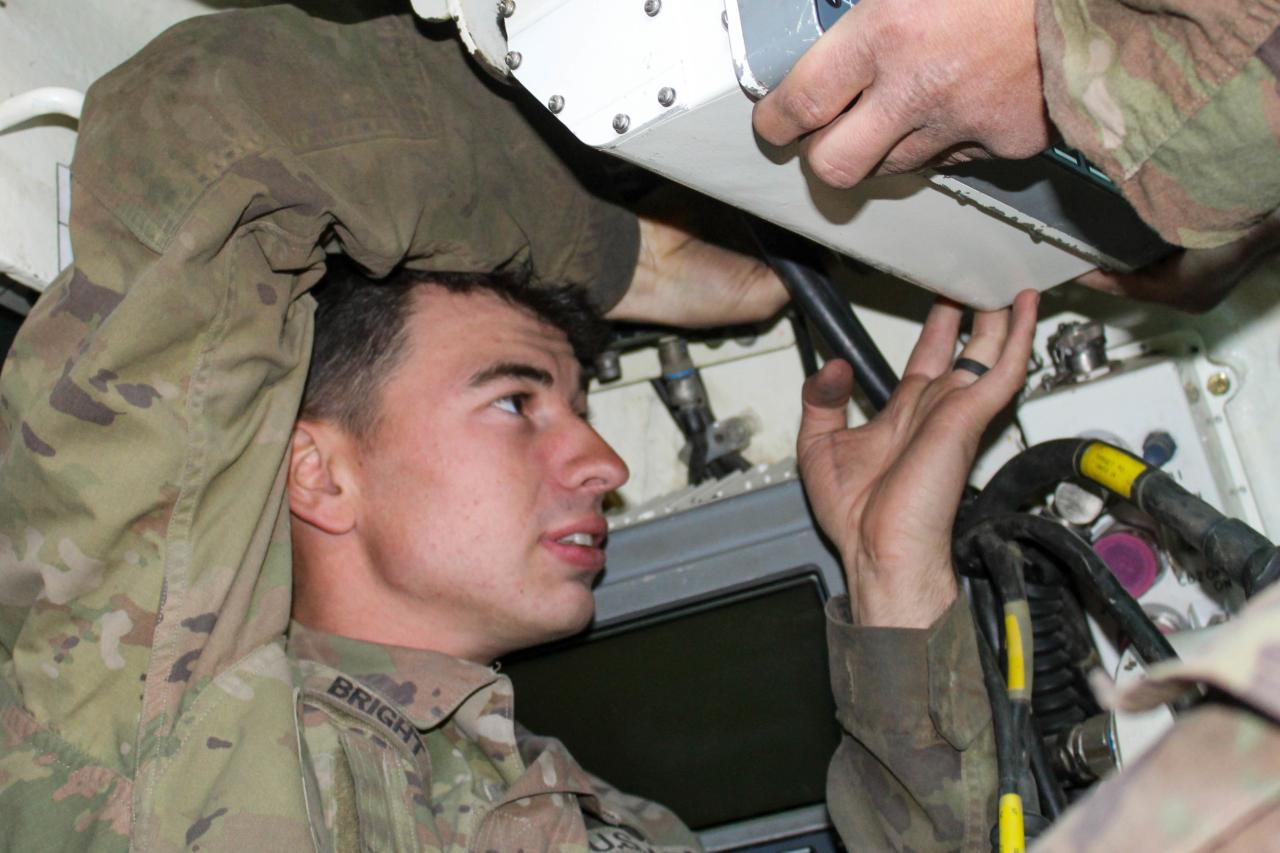
The training devices employ a clever design to teach maintainers how to detect and repair issues with the electromechanical devices.
“We lay an extra wire in the cable that looks exactly like the cables in the real vehicle,” Patten said. “Then we send a signal indicating there is a fault, even though there isn’t, such as a circuit is broken or the battery is disconnected. The soldier diagnoses it, does the maintenance steps, then the next solider comes in and does the same thing.”
Instructors are located beside the training devices with their own screens so they can see exactly what soldiers are doing. Soldiers work their way through training task lists (TTLs), where they learn hundreds of repairs. On the PTT, there are 54 TTLs required for
soldiers to become qualified; on the HOTT, there are 82 TTLs required for qualification. Within each TTL, there are hundreds of exercises.
The maintenance training devices will be used by soldiers at a major Army installation.
“These training devices are the key component that support soldiers training to repair the Bradley,” Bartos said.
The industry partner spoke highly about the CTMA Program’s ability to accomplish DoW priorities and the rapid innovation facilitated by its collaborative network.
“The Army and soldiers benefited immensely by having CMTA as a contract vehicle,” Patten said. “CTMA has a rapid timeline for getting onto contract. We blew everybody’s mind in PDM Bradley when we were under contract 90 days after writing the concept paper.”
The CTMA Program’s collaborative agreement was a key aspect of this project’s ability to harness commercial technologies for improved materiel readiness.
“The Bradley maintenance trainers are the gold standard because of the CTMA cooperative agreement,” Patten said. “The collaboration of the CTMA Program enabled us to build training devices of this caliber. The government stakeholders and the industry team held weekly meetings where we collaborated to design and build the training devices. The CTMA collaborative agreement allowed us a great deal of flexibility. We were able to iterate and improve as we collaborated. We met every single requirement that the user wanted, inside the funding limit. We were also able to make tradeoffs to save money. CTMA has a flexible and rapid process to enable the team to refine requirements and modify as needed—that’s the beauty of CTMA, which you don’t see often.”
Note: This article is deemed Distribution Statement A: Approved for public release; distribution is unlimited.